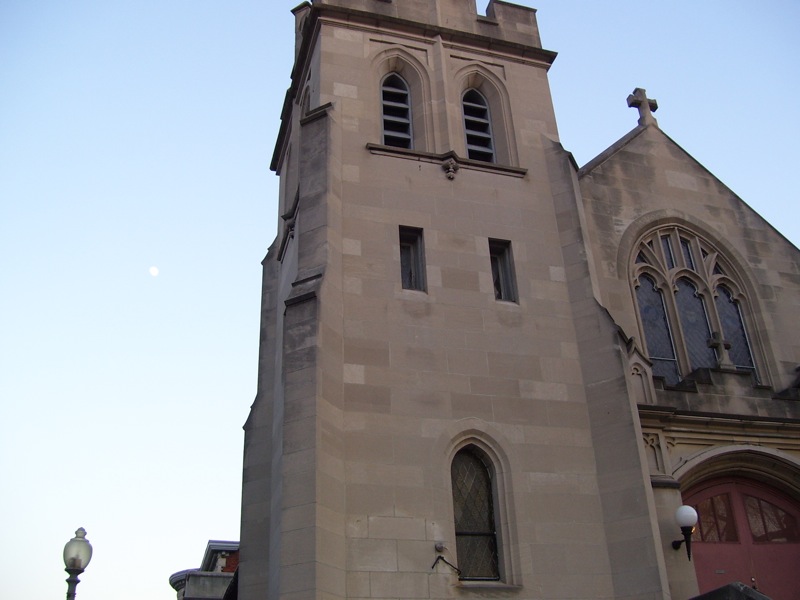
This church building gives me Lutheran church vibes. This church sits in the Mount Vernon Sq part of Truxton Circle. It also housed the Israel Metropolitan CME Church during the 1957 Church Survey.
This church building gives me Lutheran church vibes. This church sits in the Mount Vernon Sq part of Truxton Circle. It also housed the Israel Metropolitan CME Church during the 1957 Church Survey.
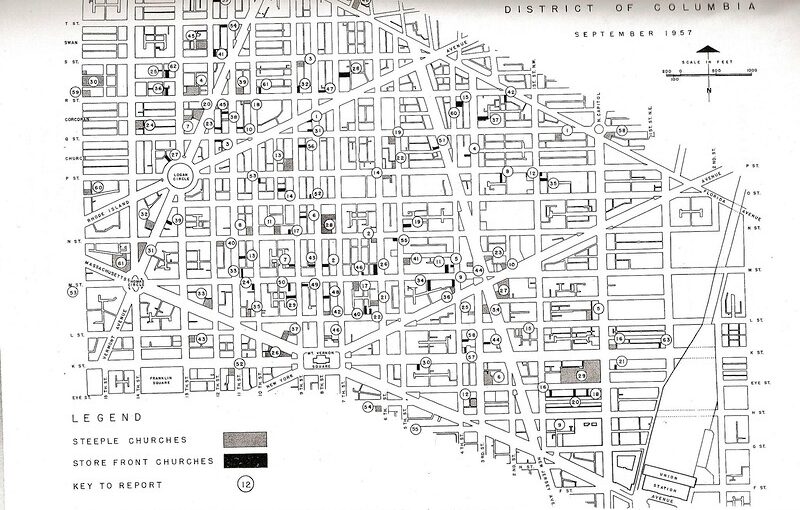
I was wondering if I got all the churches in the 1957 Northwest Urban Renewal Church Survey. The Northwest Urban Renewal Area was the area that makes up Shaw, Mt. Vernon Sq and Triangle, Chinatown, Downtown and whatever that is near Union Station. So here is a list of the steeple churches captured by the 1957 survey:
STEEPLE- CHURCH INDEX
NORTHWEST URBAN RENEWAL AREA
Baptist
Corinthian
First Rising Mt. Zion
Greater New Bethel
Metropolitan
Mt. Airy
Mt. Carmel
Mt. Gilead
New Bethany
Paramount
Redeemer Italian
Salem
Second
Shiloh
Springfield
Southern
St. Phillips
St. Stephan’s
Tenth
Third
Vermont Avenue
Methodist
Galbraith
Hemingway Temple A. M. E.
Israel C.M. E.
John Wesley A. M. E.
Miles Memorial C.M. E.
Mt. Vernon
Catholic
Holy Redeemer
Church of the Immaculate Conception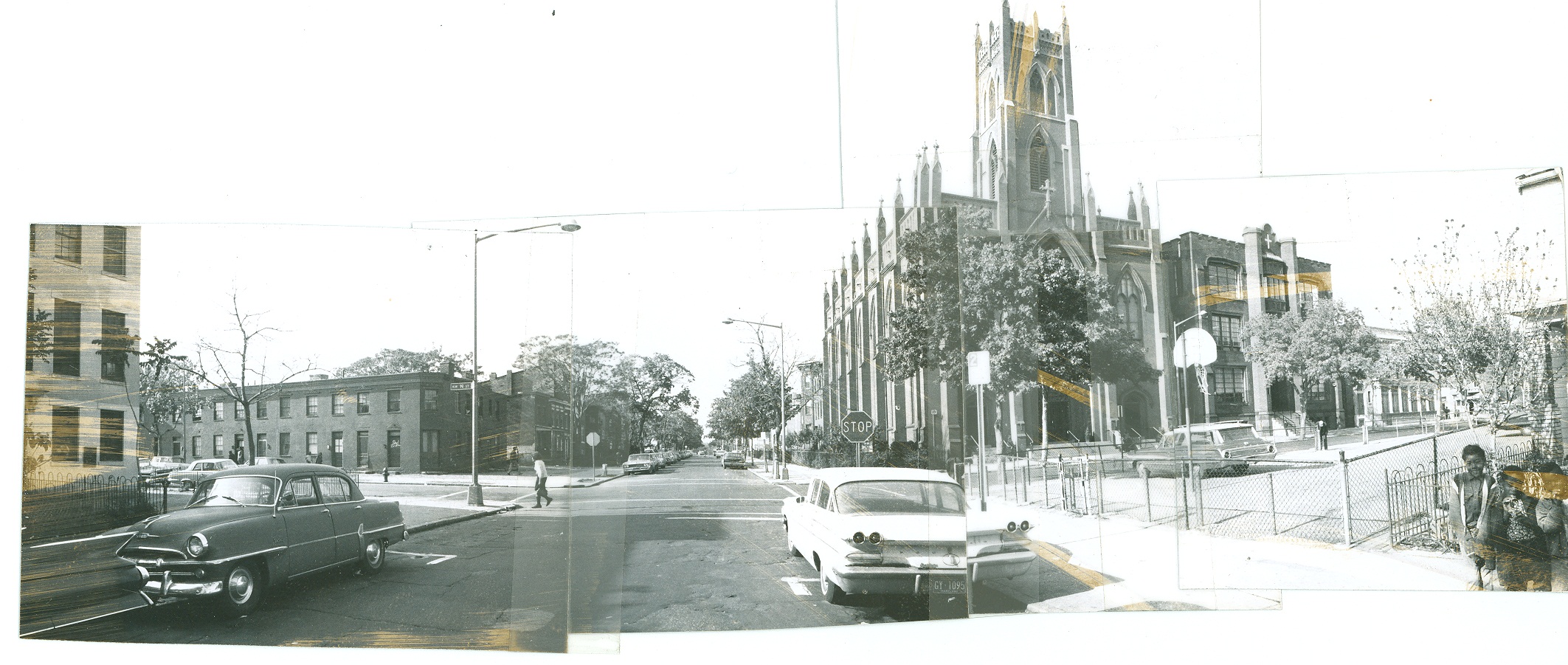
St. Aloysius
Lutheran
Luther Place Memorial
Mt. Olivet
Others
Ascension and Saint Agnes Protestant Episcopal
Bible Way
Chinese Community
Church of God & Saints of Christ
Full Gospel Tabernacle
Holy Trinity
Lincoln Temple Congregational Christian
Mt. Zion Pentecostal
New Tried Stone Church of Christ
Rehoboth Church of God
Third Church of Christ Scientist
Third Church of God
Twelve St. Christian
Verbycke Spiritual
Two Block Fringe Area
Baptist
Berean
Florida Ave
New Hope
Peoples Seventh Day
Walker Memorial
Methodist
Asbury
Metropolitan AME
Turner AME
Catholic
St. Mary Mother of God
St. Paul the Apostle
St. Augustine
Others
Church of the Holy City
Eckington Presbyterian
Fifteenth Presbyterian
Grace Reformed
National City Christian
St. Luke Protestant Episcopal
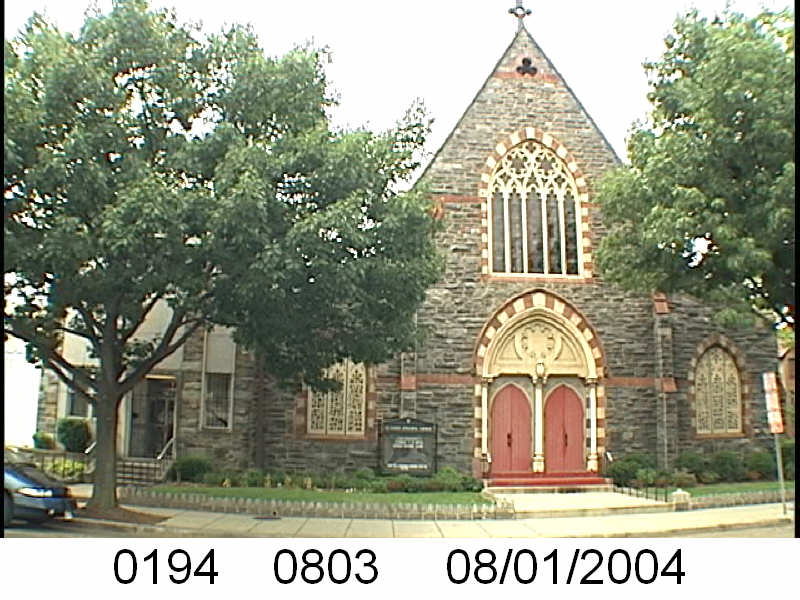
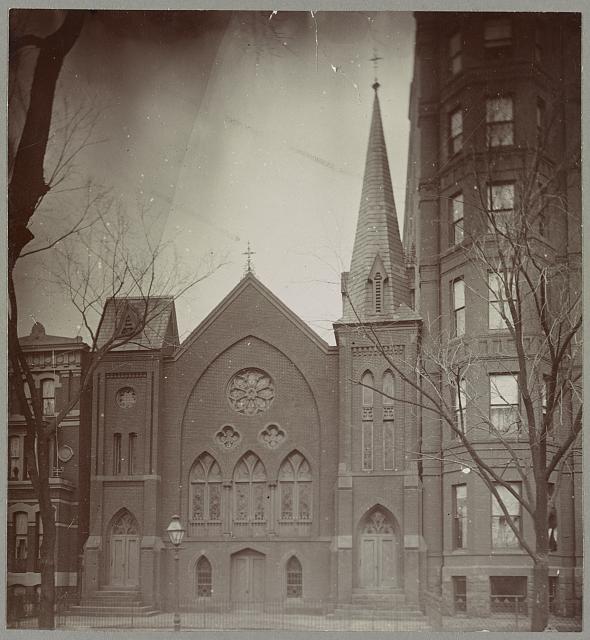
This is the old building, probably the same one that was in the 1957 Church Survey.
In 1957 there was as survey of churches in the Northwest Urban Renewal Area, which included Shaw, Downtown, and the area near Union Station. To learn more about the 1957 Church Survey read my previous posts, The Uniqueness of the 1957 Church Survey and Church Survey Northwest Urban Renewal Area October 1957.
I think this is the last of the 1957 Church Survey churches.
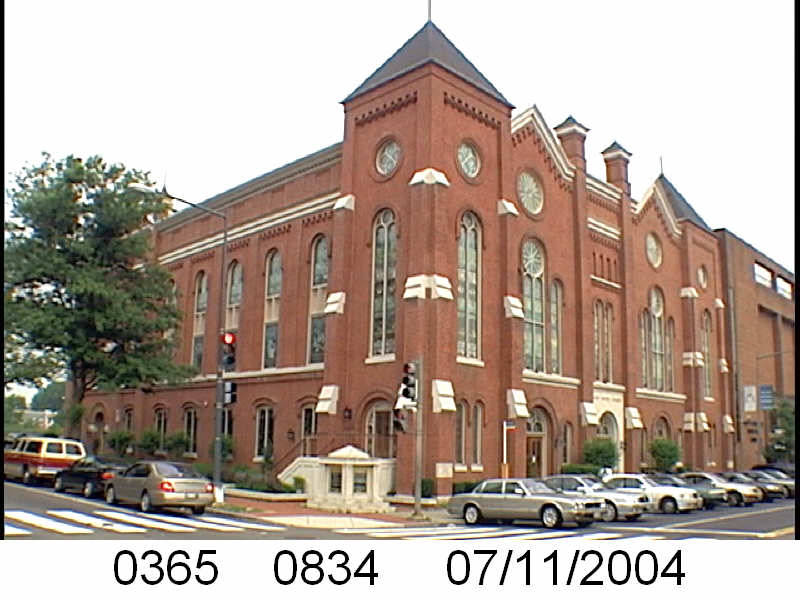
Shiloh. At the corner of 9th and P St NW, it has been a major player in the neighborhood, for good and ill. When I think of the buildings left to rot on their block, fighting liquor licenses (no need to support, that’s like asking the Mormons to support a coffee shop, no.) and parking. They also host VIPs who need to check off ‘visit to African American church’ on their list. I have fond memories of muckty-mucks visiting from the Clintons, the Bushes and Mayor for Life on his post prison tour.
Let’s look at Shiloh in 1957:
CS 13 Shiloh Baptist by Mm Inshaw
I feel I should mention the main building burnt down in the 1990s maybe. So that explains why it looks so new.
Shiloh, like Greater New Bethel Baptist, is a large African American church with over a thousand members showing up to services every Sunday. Also like Greater New Bethel, very few of their members live in the NW Urban Renewal Area (see above map). So it has been a commuter church for over 60 years. But it had no parking.
I wonder where all those members parked?
Before I get myself in trouble with the aunts who attend Shiloh, I’m going to stop.
In 1957 there was as survey of churches in the Northwest Urban Renewal Area, which included Shaw, Downtown, and the area around Union Station. One of the churches was Metropolitan Baptist Church at 1225 R St NW, and currently sits in Largo, MD. To learn more about the 1957 Church Survey read my previous posts, The Uniqueness of the 1957 Church Survey and Church Survey Northwest Urban Renewal Area October 1957.
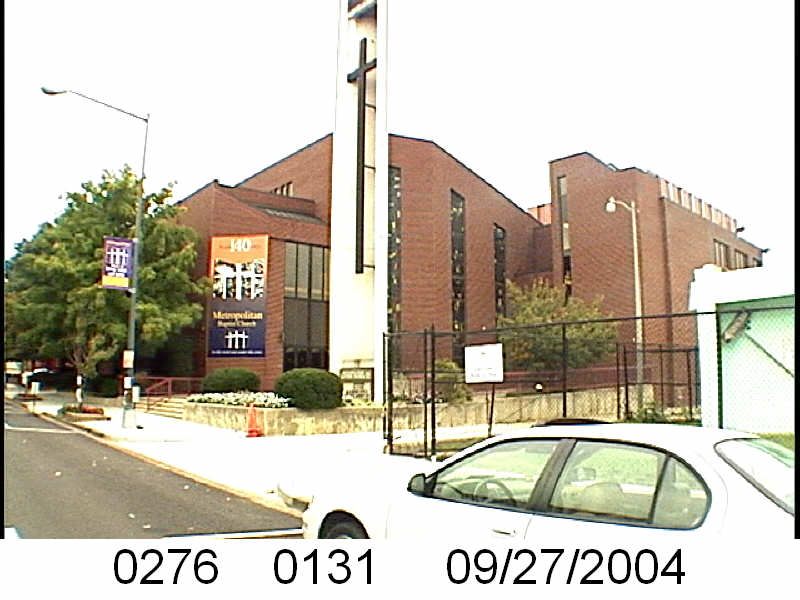
In 1957 Metropolitan Baptist was a large Black church with over 3,000 members. It was large enough and wealthy enough to support 2 full time and 2 part-time ministers, 3 church secretaries, and 4 janitors. The average reported attendance was 1,500 people a Sunday. If 500 more people showed up, it would then be a mega church.
A church with that many congregants and regular worshipers needed and had a parking lot. Their parking lot had room for 50 cars. About 40% of members lived in the urban renewal area. A majority, 57%, lived in other parts of the District. I see a notation that they used nearby commercial lots on Sundays. So they may have been more of a commuter church.
CS 4 Metropolitian Baptist … by Mm Inshaw
According to their survey, they appear to have been a very active church. There were scouts, a credit union, a YMCA basketball league along with the common religious education components.
Eventually Metropolitan would sell their church building in 2006 to Unity of Washington. While they waited for their Largo building to get built, a reduced congregation met at the Armstrong School building in Truxton Circle. There were some financial problems and that’s when the school’s grassy field was paved over. And now they are in Maryland. The End.
In 1957 there was as survey of churches in the Northwest Urban Renewal Area, which included Shaw, Downtown, and the area around Union Station. One of the churches was New Bethel Baptist Church at 1739 9th St NW. To learn more about the 1957 Church Survey read my previous posts, The Uniqueness of the 1957 Church Survey and Church Survey Northwest Urban Renewal Area October 1957.
I need to note that New Bethel was civil rights leader Rev. Walter Fauntroy’s church. But I gather since Rev. Fauntroy went off the rails in his twilight years, his name is no where on the church’s website. Whereas other Black churches featured in this series might have some mention about their history, there is none of that on the dynamic website.
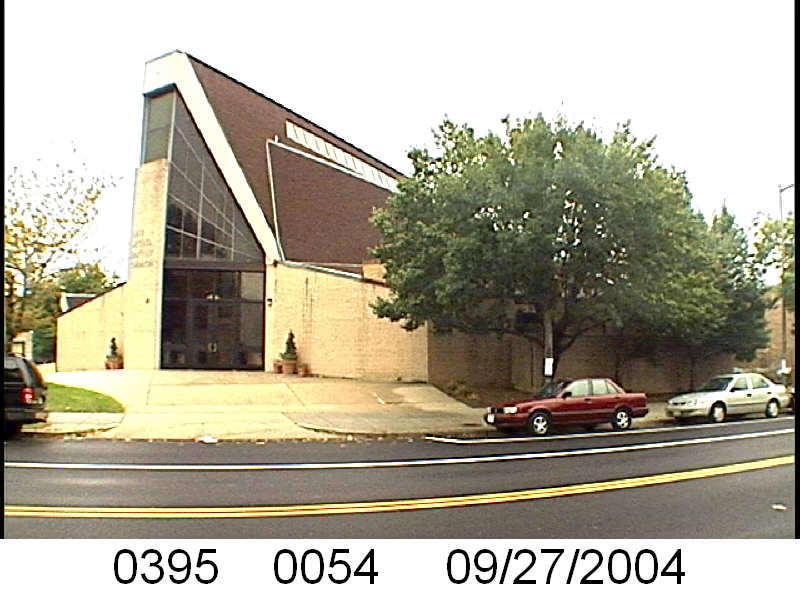
From the website it appears the church is a vibrant Black middle class church. And from the 1957 survey it appears that with an 80% white collar population, it was a vibrant Black middle class church.
CS-3-Greater New Bethel Bap… by Mm Inshaw
At the time of the survey, the church reported that none of their 700 members lived in the urban renewal area (which shrank down to the Shaw borders). They lived in other parts of the District.
I wonder if parking was a problem then?
Ah, let me get this over with. Most years I do Carter G. Woodson’s (father of Black History) Mis-Education of the Negro, his more popular book. Silly me decided, for the second year, tried to get through his History of Negro Church. I give up. This is not fun and it is the last of this year’s series. So I am going to get back to the stuff I love. I learned things, but it’s not an enjoyable read.
As many are aware it was illegal at some point in Southern States to teach slaves to read. Almost all Protestant denominations are biblically focused. Books, like the Bible, require the skill of reading.
Woodson beats up on the Episcopalians in the first part of the chapter because in his opinion they did a bad job of catechizing, and did not advocate for abolition. Woodson doesn’t mention, but I will, the Episcopalians have another book, the Book of Common Prayer. There’s a lot of reading.
Then he moves on to the Presbyterians. The frozen chosen were a tad better. They were interested in colonizing and missionary work using Black Americans. They established a training school, which later became the HBCU Lincoln University. They also provided religious instruction verbally, which was a temporary fix.
Presbyterian pastors such as Rev. Josiah Law, who provided instruction to Georgian Blacks, discovered that some opposed even verbal instruction for fear that it would lead to desires for literary instruction.
Woodson seems to have liked the efforts of the Methodists and the Baptists. Some white Christians were enthusiastic in their faith and would teach their servants how to read the Bible. “General Coxe of Fluvanna County, Virginia, had all his slaves taught to read the Bible in spite of the law and public opinion to the contrary, and so did a farmer whom Frederick Law Olmsted visited in Mississippi.”
So this year I will attempt to get through all of Carter G. Woodson’s (the father of Black History) History of the Negro Church. This post is on Chapter 6- Schism and the Subsequent Situation. However, since this has little to do with Truxton Circle or the history of Shaw. I’ll probably take on the next half, next year. It’s a chore, and this blog needs to be fun for me to do what I do.
This is the chapter where Carter G. Woodson gets into what he really is interested in, how the different denominations that attracted Black congregants dealt with the question of slavery. He looks at the Methodists, the Presbyterians, the Baptists and glances at the Episcopalians.
Woodson is interested in if a denominational organization decided that slavery was wrong how did they go about living that out. Up until this point in the book Woodson was looking at the various church organizing and planting that had or was directed at a Black American population. This then sets up an understanding, via how churches were organized, how they could or couldn’t get members to take action against slavery.
So what are some examples? Well there is the tried an true strongly worded statement. The Presbyterians’ General Assembly did this. The Alabama State Baptist Convention denied slaveholders certain appointments.
The surprising thing I found in this chapter was the mention of Black burial societies in the South. The mention is very brief but interesting when you think of all that prompted the necessity for a burial society, raising money to bury someone properly, and the means to keep and maintain a group.
In 1957 there was as survey of churches in the Northwest Urban Renewal Area, which included Shaw, Downtown, and the area near Union Station. One of the churches was Redeemer Italian Baptist Church . To learn more about the 1957 Church Survey read my previous posts, The Uniqueness of the 1957 Church Survey and Church Survey Northwest Urban Renewal Area October 1957.
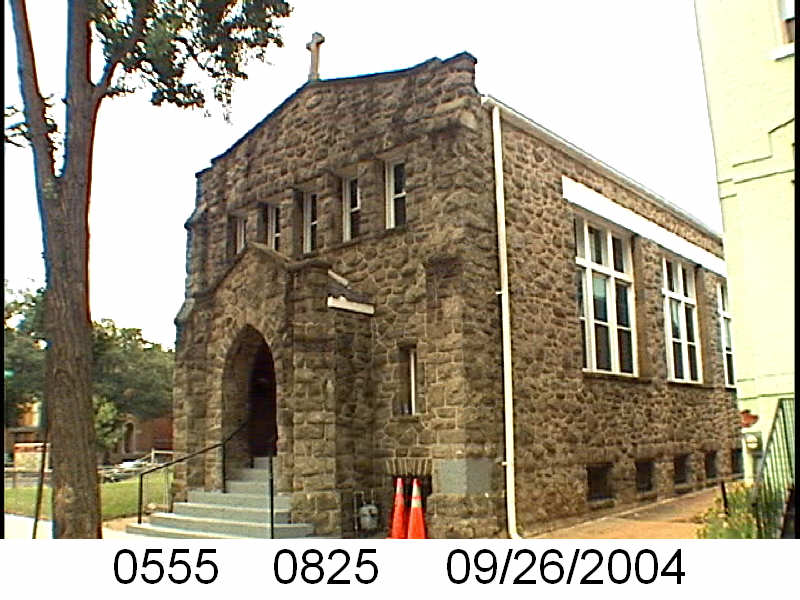 Redeemer was a mystery. It was this odd ethnic Italian Baptist church in a largely Black neighborhood. I’d been told, by the owner of Catania Bakery that there was a decent sized Italian population in Truxton Circle. They are no more. I have no idea where they went or how many were here in the first place.
So I will do something new. I will look at the land records.
Redeemer Italian Baptist Church was at 1200 Kirby St NW, sitting on Square 555, lots 62 and 63. In 1923 the trustees of Chiesa Del Redentore Italian Baptist, Leonardo Dell Erba, Olindo Marseglia, and Pasquale Vasco took out a loan of $10,000 from the Perpetual Building Association, a lender that did a lot of business in Truxton Circle. The debit was settled in 1943. In 1964 the church sold the property to New Birth Baptist Church.
According to a website regarding corporations, Redeemer Italian Baptist Church of Washington, DC dissolved in 1967. As I have learned from Dr. Carter G. Woodson’s History of the Negro Church (yes, this is an Italian church), individual Baptist churches can be rather independent entities. As you will see below from the survey, most of the church’s parishioners lived in the Maryland and Virginia suburbs. So it would be a fair guess the enthusiasm and spirit that supported the church in the 1920s, was long gone in 1967.
CS-10-Redeemer Italian Baptist Church by Mm Inshaw on Scribd
So let’s look at the state of the church in 1957.
It was a small church with only 125 people, ethnic Italians, most of whom did not live in the city, and none in the area, which included what is now known as Downtown, Swampoodle, Mt. Vernon Sq/Triangle, and Shaw. With 40% of the congregation being under the age of 18, I’d say this was a commuter church of sizable Italian families…. who were not Catholic…. because this is a Baptist church and there is a difference. A normal Sunday would have 60-65 people in attendance. Those families were mostly middle/blue-collar as 30% were white collar and 55% were skilled manual labor, think carpenters, plumbers and machinists.

The church was founded in 1915 on 48th Avenue NE as a storefront church. From 1919-1923 it met at the Scottish Rite Cathedral. Looking around in the Evening Star, they were at 3rd and E Streets NW in 1922. In 1920 they started building the church that sits at 1200 Kirby NW.
In the 1957 has the pastor as the Rev. Olindo Marsaglia (Olindo Marseglia is on the loan docs) and the founding of the 1200 Kirby St NW church was Rev. MC Marseglia. This, and this is just me guessing, smells like a family business. Let’s wander back to our Woodson, remember Baptist churches are independent of each other with little to no hierarchical body over them. So Rev. Olindo Marseglia died in 1966, and the church dissolved in 1967. So it makes sense, when looking at it as a Marseglia family venture it went away when the last interested Marseglia died.
Rev. MC Marseglia from the 1920 article appears to have been the Rev. Domenico Costantino “Mimi” Marseglia. According to his Find a Grave write up, “Rev Domenico ‘Mimi’ was pastor at the Federal Hill Italian Baptist Mission in Providence, RI. The Euclid Ave Baptist Church in Cleveland, OH. As well as the Church of the Redeemer in Washington, D.C.” Also poking around I found an obit for the daughter of one of the trustees, Angelina Vasco Sepe, that mentions the Redeemer Italian Baptist Church.
Anywho, this was an interesting slice of Truxton Circle Italian-American history.
This year I will attempt to get through all of Carter G. Woodson’s (the father of Black History) History of the Negro Church. This post is on Chapter 4 The Independent Church Movement.
In my other post regarding chapter 4, Woodson recognized Richard Allen as important figure and founder of the African Methodist Episcopal Church.
A few days ago I was watching with Destructo-kid a cartoon history of Richard Allen. I vaguely remembered the name and as Allen’s life story was told, I realized that Woodson had written about him.
This is way more interesting than Woodson’s take.