Carter G. Woodson- 1538 9th St NW- House History

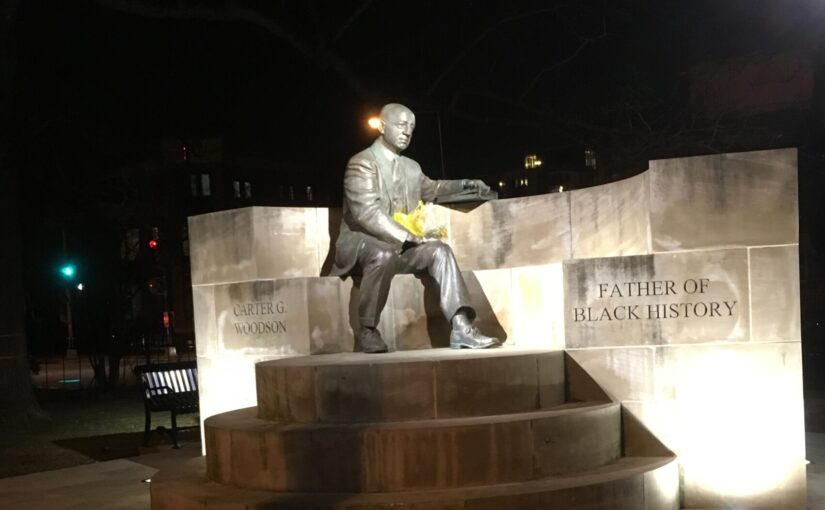
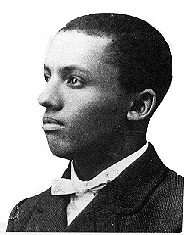
Continuing to recognize Black History Month, let’s take a look at the father of Black History, Dr. Carter G. Woodson’s home and office at 1538 9th St NW.

According to the DC Recorder of Deeds database on September 6, 1922, a single man, Carter G. Woodson purchased 1538 9th St NW (Sq. 365, lot C) purchased his home from Dr. Ida J. Heiberger, a white female physician. She attended Howard University for a hot minute in 1881. According to her Wikipedia page she graduated from the Woman’s Medical College of Pennsylvania in Philadelphia, in 1885.

To finance his purchase, he borrowed $3750 from trustees Julius I. Peyser and Theodore D. Peyser. Julius was the president of Security Savings and Commercial Bank and lawyer with Peyser, Edelin and Peyer. Theodore was his brother and the other Peyser in the law firm. They both were white.

October 7, 1927 he was released from the Peyser mortgage.

December 1954 the Association for the Study of Negro Life and History, the organization Woodson founded, borrowed $10,000 from Perpetual Building Association. The document noted Woodson’s death and that the Association was the corporate heir.

He died in 1950. He did not seem to leave the property to his sisters or brother. His will appears to have gone through probate in December 1958 in West Virginia. But I couldn’t find the actual will for details.

Despite being dead he was responsible for a tax lien, well him and the Associated Publishers, Inc in 1983. Then later in the 1980s the Association got in trouble with the IRS and there were many IRS tax liens.

Black History Month meets Memory Lane: Carter G. Woodson’s House

I wonder if new residents and younger people could appreciate what residents in the 00s and 2010s had to deal with concerning a row of dilapidated Shiloh properties on 9th Street.

There was great excitement when there was rumblings that the National Park Service would step in because this was the home of the father of Black History and Black History Month. And then there was nothing. Then it didn’t seem the NPS was going to do anything with this property or the adjoining properties it owned. I also vaguely remember the NPS was trying to take over a private home on the corner that is now a restaurant.

Now there is a museum. I haven’t been in it. The one day when I had off and during their normal hours, the place seemed closed.

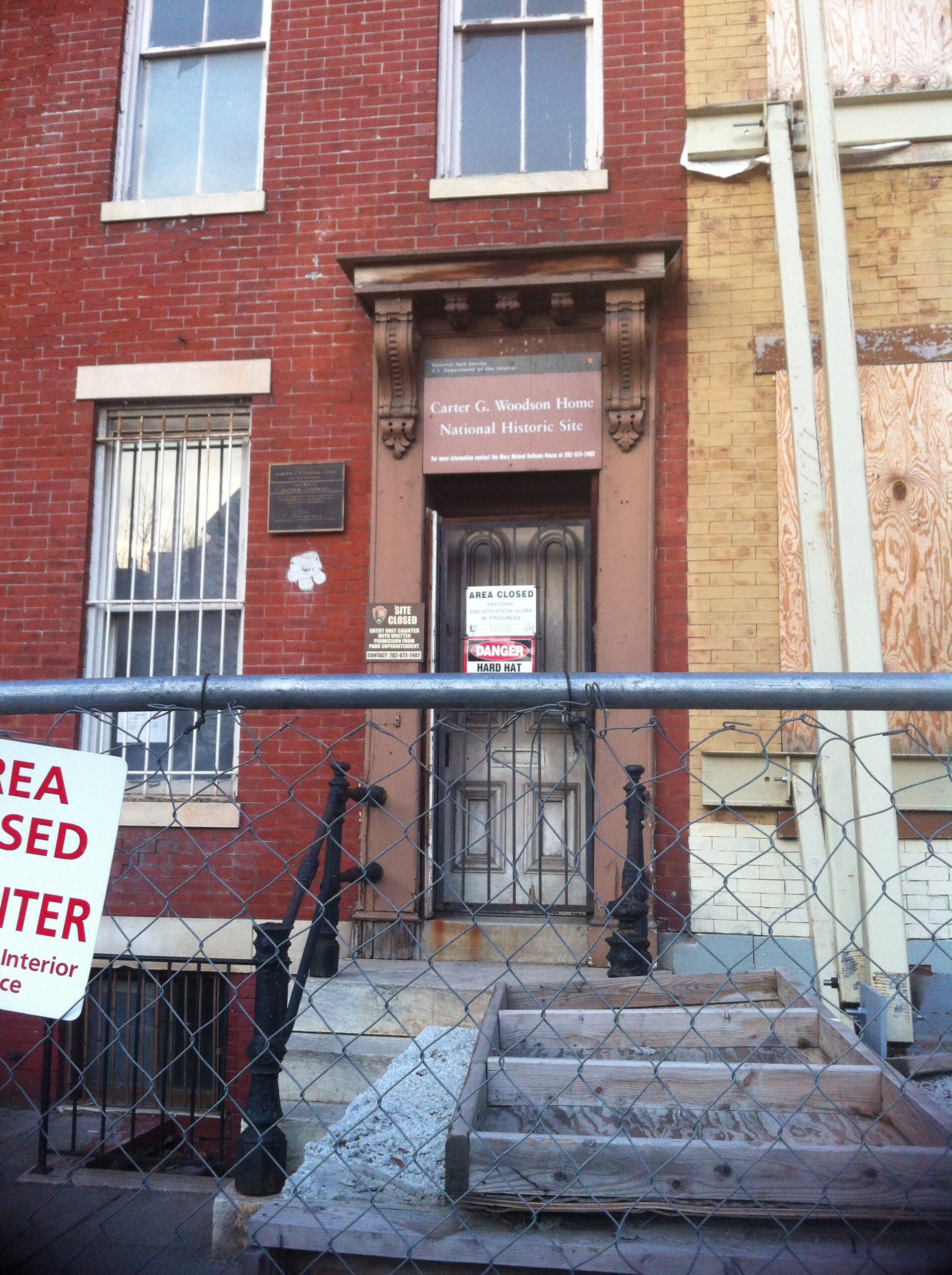
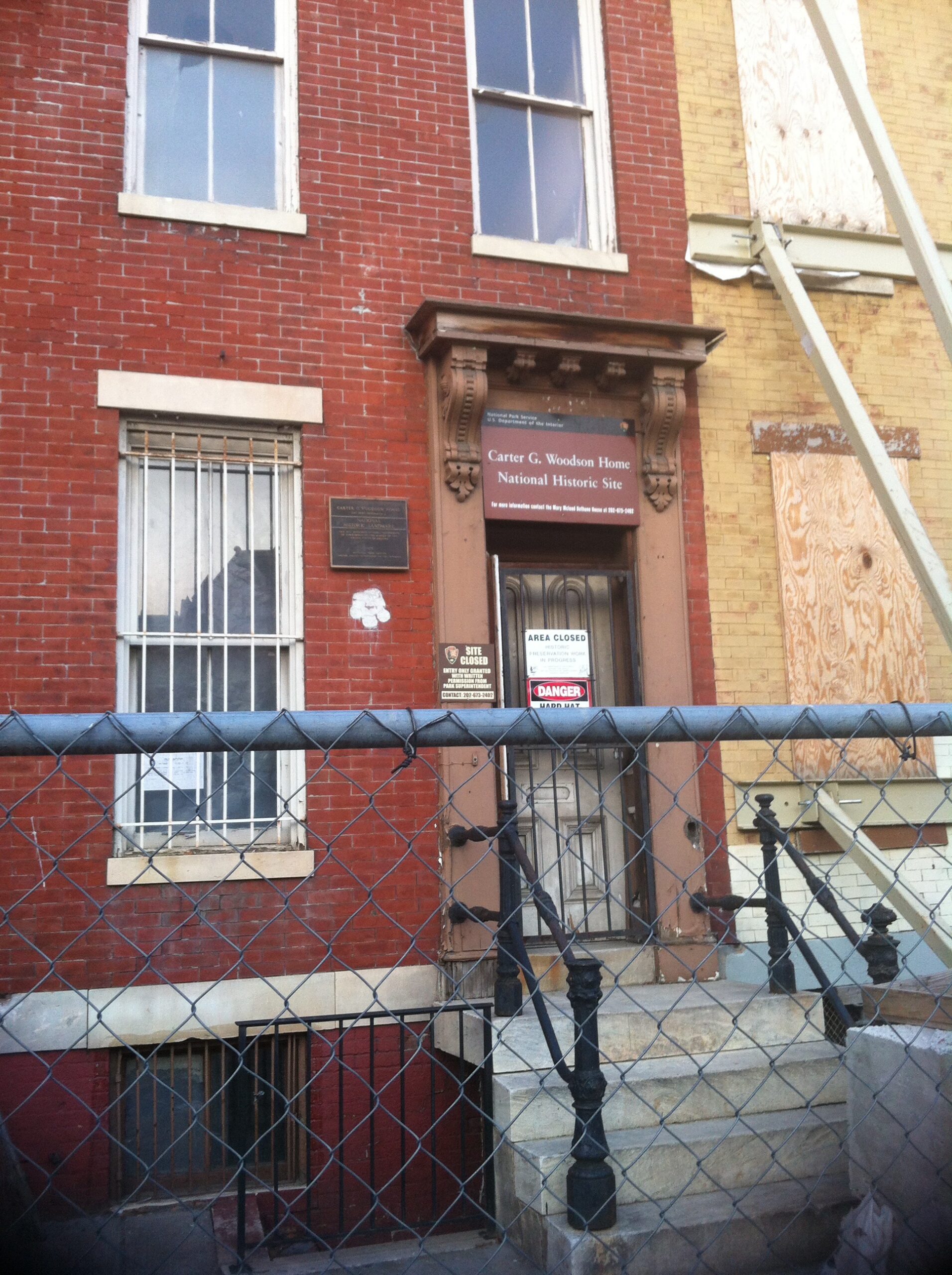
Carter G. Woodson House. 1538 9th Ave NW. Taken February 20, 2018

Carter G. Woodson and The Mis-Education of the Negro

Back in 2021 and 2022 I reviewed each chapter of Carter G. Woodson’s most famous book, the Mis-Education of the Negro. I think the 2021 and 2022 reviews are very similar. Here are the 2022 posts.

Chapter 1- THE SEAT OF THE TROUBLE
Chapter 2- HOW WE MISSED THE MARK
Chapter 3- HOW WE DRIFTED AWAY FROM THE TRUTH
Chapter 4- EDUCATION UNDER OUTSIDE CONTROL
Chapter 5- THE FAILURE TO LEARN TO MAKE A LIVING Part 1 and Part 2
Chapter 6- THE EDUCATED NEGRO LEAVES THE MASSES
Chapter 7- DISSENSION AND WEAKNESS
Chapter 8- PROFESSIONAL EDUCATED DISCOURAGED
Chapter 9- POLITICAL EDUCATION NEGLECTED
Chapter 10- THE LOSS OF VISION
Chapter 11- THE NEED FOR SERVICE RATHER THAN LEADERSHIP
Chapter 12 HIRELINGS IN THE PLACES OF PUBLIC SERVANTS
Chapter 13- UNDERSTAND THE NEGRO
Chapter 14- THE NEW PROGRAM
Chapter 15- VOCATIONAL GUIDANCE
Chapter 16- THE NEW TYPE OF PROFESSIONAL MAN REQUIRED
Chapter 17- HIGHER STRIVINGS IN THE SERVICE OF THE COUNTRY
Chapter 18- THE STUDY OF THE NEGRO
APPENDIX

This was fun and educational. You should read the whole book or listen to the audiobook.

Source: To save on typing I used the History is a Weapon website’s reprinting of The Mis-Education of the Negro.

Black History Month- Formerly Negro History Week

Black History Month began as Negro History Week, as created by former Shaw resident, Dr. Carter G. Woodson in 1926, 100 years ago. In a 1925 newspaper article, mentioning Negro History Week noted that Woodson believed that the achievements of Black Americans needed more publicity, as well as people to chronicle and preserve Black History.

In 1926 Negro History Week was to be observed February 7th to 12th. Support came from libraries, colleges, churches, lodges, and clubs.

Fast forward to fifty years ago, 1976 and President Gerald Ford recognized National Black History Month. I feel this is the 1st history month before others and started the trend.

National Black History Month Message, 1976. Source- National Archives

Follow-up to the Carter G. Woodson FOIA request

In 2024 I submitted a few requests to the FBI for Carter G. Woodson.

The FBI wrote back and had this to say:

Then I wrote to NARA as Mari InShaw requesting the files. Almost all were considered non-responsive. That means, Dr. Woodson was not the main subject or even a sub-subject of the files. Then why would the FBI tell me that I should go to the National Archives? Well, the FBI’s definition of responsive is way more inclusive and broader than needed.

Carter G. Woodson’s name might show up somewhere in the files. I believe if they touch on history or have a news clipping that includes Dr. Woodson’s name, it’s FBI responsive.

On the plus side, J. Edgar Hoover did not consider Dr. Woodson a commie. If he had, there would have been a good file.

Carter G. Woodson- Black History Month 2026

What am I going to do this year? In previous years I have posted the works of Carter G. Woodson, former Shaw resident and father of Black History Month? I will do so again, but more of a hodgepodge with no central theme like his book.

CARTER G. WOODSON – TEACHER, HISTORIAN, PUBLISHER Source: National Archives NAID 535622

Carter G. Woodson FBI FOIA request – #1

So I put in a FOIA request to the FBI looking for Carter G. Woodson. Not my first. That was George Basiliko. That led to bupkis. But I decided to give it another try with Carter G. Woodson. I got a response to go bug the National Archives with a couple of file numbers and the document below.

I was going to sit on this but the FBI’s eFOIA system got some crazy bug and sent me about 18 emails in the past 3 days. I have another non-Shaw related request (I’m curious about stuff) and was hoping it was about that. But nope. It took me a while but I discovered it was the same stuff I got before. It’s just one crazy duplicate email after another. And the FBI gives you 48 hours to click on the link if you want your document. I clicked the link and I got an error.
Instead of suffering in silence, I decided to blog about it. May as well write a post.

The above disappointing article is a very brief mention of Dr. Carter G. Woodson. I’m guessing it is FBI file 25-LA-330971 and this appears to be some African American paper where Nation of Islam (NOI) leader Elijah Muhammad had a column. EM mentions Woodson’s book Negro Orators and Their Orations, published in 1925.

When I get something from the National Archives, I might share it. If it is semi-useless as the newspaper clipping from the FBI, I probably won’t.

Black History Month meet Memory Lane: Carter G. Woodson’s House

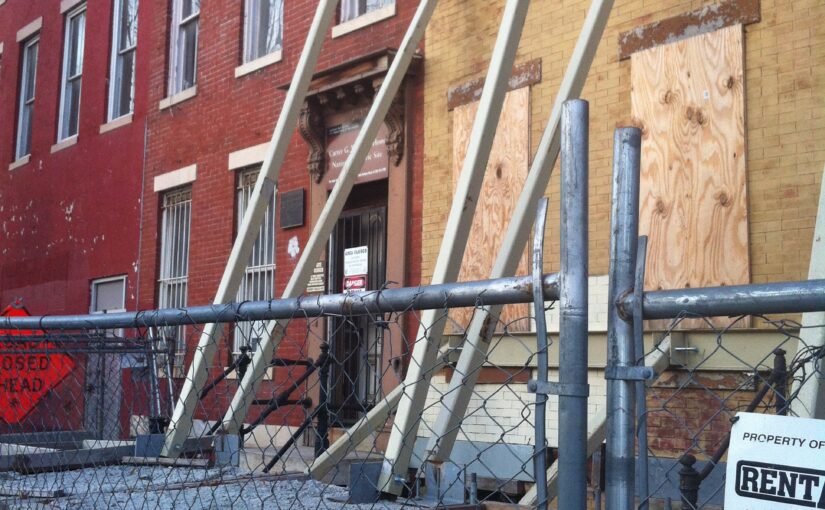
Looking at some of the photographs I’ve taken I get to go down memory lane. Since it is Black History Month, let’s look at the father of Black History, Dr. Carter G. Woodson’s house at 1538 9th St NW. But let’s look at it in February 2014. A decade ago.

At the time it didn’t seem the National Park Service was going to do anything with this property or the adjoining properties it owned. I also vaguely remember the NPS was trying to take over a private home on the corner that is now a restaurant.

It had been this way for a while.

Carter G. Woodson: History of the Negro Church: Ch.7 Religious Instruction Revived

Ah, let me get this over with. Most years I do Carter G. Woodson’s (father of Black History) Mis-Education of the Negro, his more popular book. Silly me decided, for the second year, tried to get through his History of Negro Church. I give up. This is not fun and it is the last of this year’s series. So I am going to get back to the stuff I love. I learned things, but it’s not an enjoyable read.

As many are aware it was illegal at some point in Southern States to teach slaves to read. Almost all Protestant denominations are biblically focused. Books, like the Bible, require the skill of reading.

Woodson beats up on the Episcopalians in the first part of the chapter because in his opinion they did a bad job of catechizing, and did not advocate for abolition. Woodson doesn’t mention, but I will, the Episcopalians have another book, the Book of Common Prayer. There’s a lot of reading.

Then he moves on to the Presbyterians. The frozen chosen were a tad better. They were interested in colonizing and missionary work using Black Americans. They established a training school, which later became the HBCU Lincoln University.  They also provided religious instruction verbally, which was a temporary fix.

Presbyterian pastors such as Rev. Josiah Law, who provided instruction to Georgian Blacks, discovered that some opposed even verbal instruction for fear that it would lead to desires for literary instruction.

Woodson seems to have liked the efforts of the Methodists and the Baptists. Some white Christians were enthusiastic in their faith and would teach their servants how to read the Bible. “General Coxe of Fluvanna County, Virginia, had all his slaves taught to read the Bible in spite of the law and public opinion to the contrary, and so did a farmer whom Frederick Law Olmsted visited in Mississippi.”


Carter G. Woodson: History of the Negro Church: Ch.6 Schism & the Subsequent Situation

So this year I will attempt to get through all of Carter G. Woodson’s (the father of Black History) History of the Negro Church. This post is on Chapter 6- Schism and the Subsequent Situation. However, since this has little to do with Truxton Circle or the history of Shaw. I’ll probably take on the next half, next year. It’s a chore, and this blog needs to be fun for me to do what I do.

This is the chapter where Carter G. Woodson gets into what he really is interested in, how the different denominations that attracted Black congregants dealt with the question of slavery. He looks at the Methodists, the Presbyterians, the Baptists and glances at the Episcopalians.

Woodson is interested in if a denominational organization decided that slavery was wrong how did they go about living that out. Up until this point in the book Woodson was looking at the various church organizing and planting that had or was directed at a Black American population.  This then sets up an understanding, via how churches were organized, how they could or couldn’t get members to take action against slavery.

So what are some examples? Well there is the tried an true strongly worded statement. The Presbyterians’ General Assembly did this. The Alabama State Baptist Convention denied slaveholders certain appointments.

The surprising thing I found in this chapter was the mention of Black burial societies in the South. The mention is very brief but interesting when you think of all that prompted the necessity for a burial society, raising money to bury someone properly, and the means to keep and maintain a group.