Property Taxes and Assessments

Everyso often I wander away from history and treat this as a personal blog. Sometimes I like to fight with strangers on the internet. There is a fool who believes that an increasing assessed value does not increase your taxes. As someone who has paid property taxes in 4 jurisdictions, and has looked at the tax assessment sent (trying to figure out how to argue against it), this was a lie.

I’ll touch on property taxes and I will attempt to throw in some history. Let’s go back to 2007. In my post Tax Assessments, I noted that DC was up to some assessment black magic, by inflating the land assessment compared to the structure (aka the house) on the property. To me, this appeared to be away for DC to squeeze more money out of the most run down houses in good/up & coming neighborhoods.

Prior to that, in 2005, it appeared that DC was just increasing the value of our homes by $60K for poops and giggles.

Lastly, in 2010 I wrote about how different neighbors on the block pay different taxes even if their properties are roughly assessed around the same amount. It depends on when they bought or got the property, if they are a resident owner, if they qualify for some sweet deal like the Senior Citizen Tax Relief and other factors.

Property Taxes and Schools

When my spouse was a teen his parents (now both dead) got some friends to fake an address so he could go to another high school in the city where they lived. That was address fraud. The practice is sometimes called residency fraud, but since his parents were in City X, CA and paying City X property taxes, they were residents of City X, let’s go with address fraud.

I’m not going to write about Maryland residents sending their children to DC schools. That’s another rant for another day.

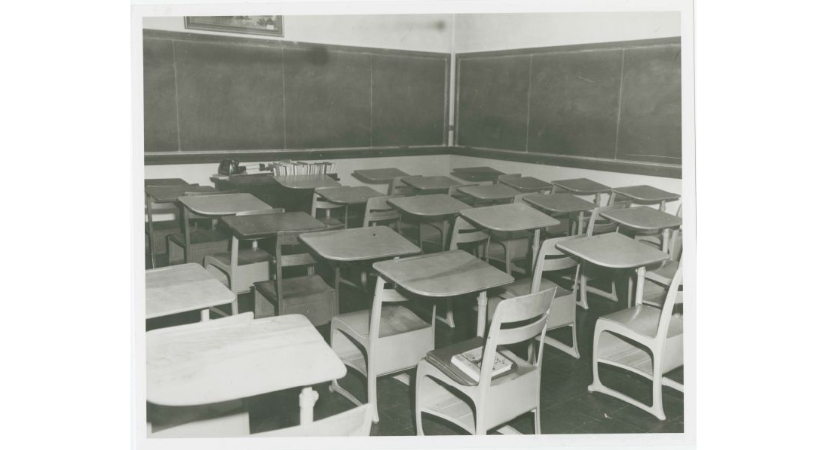
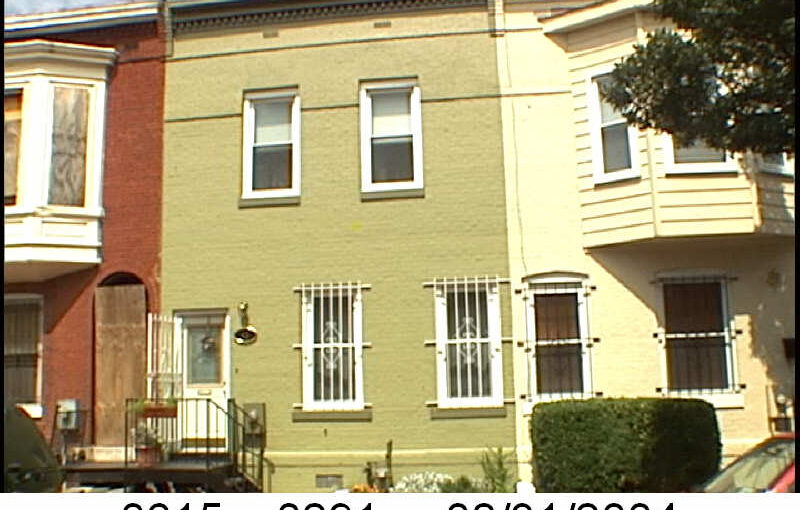
KIPP Will school. Taken August 2019

No instead of going back in forth with some stranger on X about property taxes and if they actually go up every year due to assessments, I’m going to create a post. Feel free to fight me.

I don’t blame my dead in-laws. They were paying taxes for all the schools in their city, regardless if they were using them. People without kids pay property taxes which may (depending on the jurisdiction) pay for schools in that jurisdiction. To my knowledge, people in Hillcrest are paying taxes that support schools in Foxhall.

I’m in PG County and my ginormous tax bill tells me how much is going to PG schools. Compared to what goes to parks and rec, not much. Parks and Recreation get over a thousand dollars of my tax bill whereas the schools get less than a couple hundred. I think I get my money’s worth. Got some nice bike trails that kinda go places I want to go and my kid’s in private school. Seriously, no one moves to PG for the schools. And 2K goes to never having guys on the corner selling heroin.

I have heard over and over property taxes are linked to the schools. As I wrote, a small portion goes to education and we’ve got an excellent elementary school. The high school sucks, but there is a nearby charter and another specialty high school up the road that works as an alternative. All for less than $200 a year in taxes.

My aunt lives down the road from me and pays less in property taxes for her condo. Because it is a condo, not a real house. Her tax dollars goes into the same PG Co. pot. I have no idea of the quality of her neighborhood school. It’s PG County, whaddya want?

I’ll end this here by saying. Urban and suburban schools can supported by different tax groups because they could be in different municipalities. Next time someone says the property taxes in one part of town supports the nice school but not the poor school in the poor part of town will need to show that the municipality doesn’t just throw all the tax money in one big pot.

Farewell Citizen Atlas

I got a warning months ago but didn’t really understand it. Citizen Atlas is gone. Sort of.

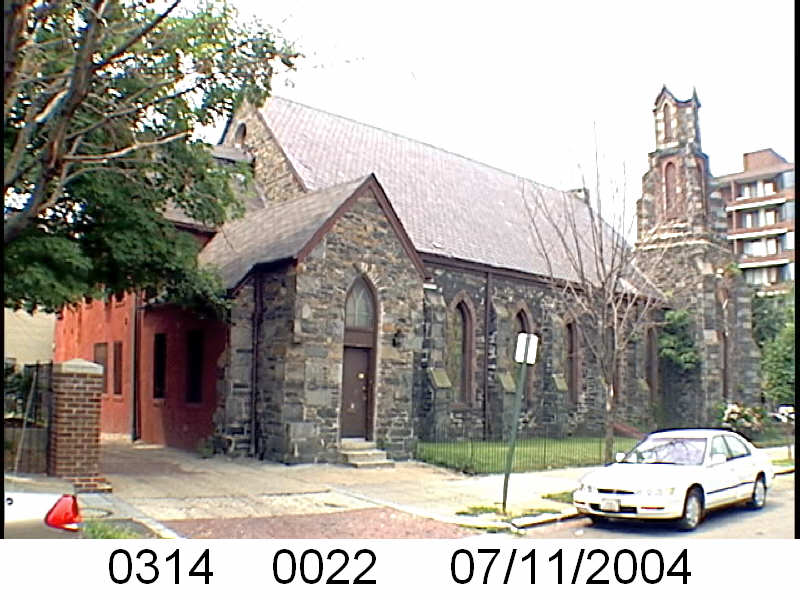
For years I have been using https://propertyquest.dc.gov/ to find information about houses in Truxton Circle and sometimes other parts of DC. I have used photos from Property Quest, which leaned on Citizen Atlas for photos for churches and other places.

But now that’s gone.

It makes sense in some ways. These photos are old enough to buy themselves a strong drink. So I hope they are with an archive or something. That is something I’ll have to look up later because this summer is personally busy for me.

Most places use Google Street View. Real estate websites use it along with the government. Those are the most up-to-date images of a property….. unless the owner or former owner has blocked it.

The photos aren’t completely gone. Not knowing when the photos will disappear, I copied all the ones used for the blog and the URLs (for now) work. Unfortunately, I THOUGHT, I had copied all the photos for Truxton Circle. But alas, no. I only did it for one block.

So I will eventually update the URLs on the blog to a page in the InShaw universe where I am hosting the images I have used. Yes, they are over 20 years old, but as far as I’m concerned they are government created and free to use.


First Time DC Government Uses Truxton Circle

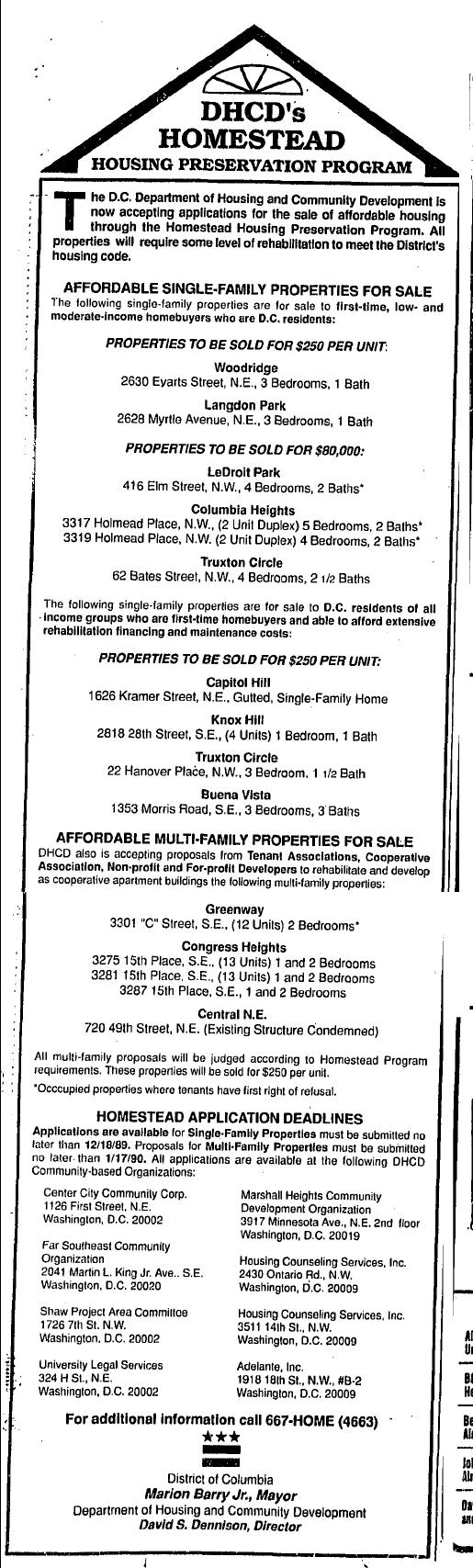
Okay firsts are tricky. They are very hard to prove. So with that said, I am going to write that in this advertisement from 1989, this was the first time the District of Columbia government called Truxton Circle, Truxton Circle.

For a mere $80,000 62 Bates St NW was being sold by DHCD. For a paltry $250.00, they offered 22 Hanover St NW.

Advert for houses for sale in 1989 for houses sold by the District Government from $250 to $80,000

Is it the very first time the DC government called Truxton Circle by the name we know it as now? Possibly. This is just the first bit of evidence I located to prove the point.

School desegregation resegregation problem

This was written in 2019 and sat in my drafts. I’ve edited a little bit.

There was a post sitting in my drafts called “Let’s Resegregate Shaw.” It was sitting there so I can get the sarcasm out of my system. Then a cooler head prevailed and I deleted it altogether.

The DC school lottery results have been out for a while which resulted in a fair number of education opinion and data reports. What bugs me is that it seems the authors don’t acknowledge the peculiarities of the District of Columbia and how whatevertheory they have that may apply to Anywhere, USA doesn’t necessarily work here.

Chocolate City and a Craptastic Education

So after desegregation in District of Columbia schools after the Bolling v Sharpe case in the 50s, there was white flight (followed by black flight but we don’t talk about that..shhhh). The result was a overwhelmingly African American public school system, reflecting the majority minority city DC had become. In the last census, Blacks did not make up the majority, but was still the largest racial group in the city.

When I arrived in the DC area in the mid 1990s, DC schools had a poor reputation. The sign that everything, including the kitchen was being thrown at the problem was when General Julius W. Becton Jr., a man with no previous background in the field of Education, was named School Superintendent in 1996. DC had some of the highest per pupil spending but the worst outcomes. Gen. Becton resigned, quit, headed for the hills, after 16 months on the job. I don’t know when the public schools went downhill, all I know is it was broken when I got here.

Addendum from 2023:

It appeared to me when I wrote this that the schools were resegregating. I couldn’t help but notice that white parents who remained in the District of Columbia flocked to certain charter schools if they didn’t live west of the park (Rock Creek) where white students were the majority.

I did a review of Shaw schools in 2021 and with the exception of KIPP the academics of many of the public and charter schools were unimpressive. And, with the exception of charter school Munde Verde, they were pretty segregated, being majority Black with so few white students their PARCC scores hardly registered.

Children/ students are not the property or products of the state. Parents are making decisions and making the effort to put their children in this or that school. So there is a limit of what the DC government can do to attempt to integrate/desegregate DC schools. We may disagree with parents’ decisions to have their children sent halfway across the city to some random charter instead of their neighborhood public school. Or parents who purposefully moved into the Deal Middle School boundary area with crowding out other students from other areas and fighting any change in that boundary.
That DC Redlining Map

People in academia tend to like to tell research adventure stories. The problem with archives and libraries and other places digitizing everything is taking the romance out of these tales. No need to get a grant, rent a crappy motel room during the middle of summer, nah. Tippy-tip tap, an email here, a subscription to a certain website and there’s your document. Of course, not everything has been digitized. And because of that, a person could still have a research adventure.

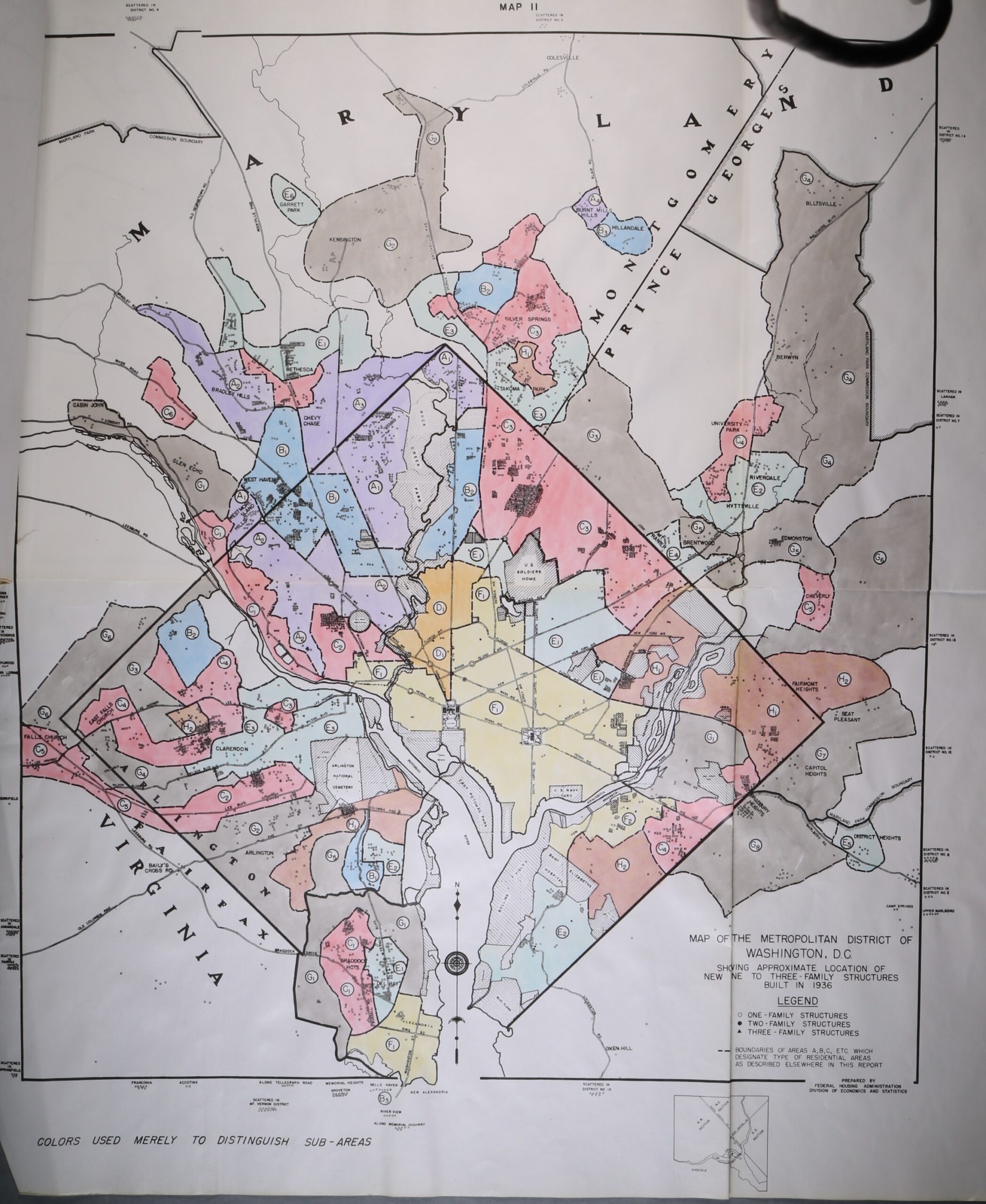
My research adventure takes place at the National Archives in College Park, MD. Those who know me are probably rolling their eyes, but bear with me. So my goal was to find the lost redlining map of Washington DC. I can call it lost, ’cause it was a b!tch to find. For one, the Mapping Inequality site showing off redlining maps doesn’t have Washington, DC. The DC Policy Center and Mapping Segregation had a map on their sites that approximated or was very similar to a DC version of the redlining map.

The DC Policy Center just said it came from the National Archives. Ok. NARA has a bunch of stuff and it’s catalog can be a PITA when you’re trying to actually find something. Clicking source just brought a person to the Mapping Segregation site. Digging into the resources there would send you back to the DC Policy Center and round and round I went. I eventually found the citation at the end of https://mappingsegregationdc.org/download/residential-sub-areas-for-website-rev.pdf. It narrowed it down to the record group (RG) and the box, but not the entry. More poking around and it was entry A1-6.

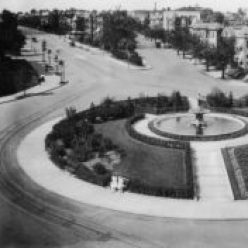
I got the box. I was in the research room scanning area. I was at a desk next to a dear friend who is a professional researcher showing me the ropes and I managed to scrounge up an SD card for the camera. But the monitor was acting funny. And the SD card was ‘corrupt’. I managed to fit just 2 images on the card before giving up. And below was what I was able to capture.

Washington DC Map 1936Source: Map 11. Housing Market Analysis Washington DC. Records Relating to Housing Market Analyses, 1940–1942. National Archives, College Park, MD RG 31, entry A1 6, (NAID 122213881)

A description of the letter based residential sub-areas.


Edited 11/6/2025 to update URL

Mulatto vs Black in the 1920 Census

As you may know I am working with the 1920 census looking at and for Black home owners in Truxton Circle. I have noticed in the 1920 census African Americans are not called African Americans, that is a more ‘recent’ term. In 1920, we were described as either Black or Mulatto.

I have seen in the census where some members of the family are described as Black and others as mulatto. This confused me, but I tended to dismiss it because those descriptions went away in the 1930 census and I clumped Black and mulatto into one group for my research.

So one day I asked an expert if there were any studies about what made someone mulatto vs Black. As an undergrad I studied the country that is modern day Haiti and the term mulatto has a definition as well as other like terms (quadroon) recognized in law and culture. Outside of Louisiana, it is meaningless in the US if not offensive to those who take offense.

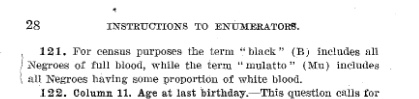
The expert pointed me to the Instructions to Enumerators.My mind was blown because I was under the impression that people were self identifying as mulatto or Black for the census. I was wrong, it was the enumerator who determined if someone was Black or mulatto. It was the enumerator’s subjective opinion that Morgan H. Dawkins was Black but his wife was mulatto.

Above I have an image of a snippet from the enumerator’s instruction book. It reads:

121. For census purposes the term “black” (B) includes all Negroes  of full blood, while the term mulatto (Mu) includes all Negroes having some proportion of white blood.

I believe the African American is a unique person who is of America. Made in America with a percentage of non-African heritage reflecting the diversity of America. With a little bit of Native American here, a little bit of European there, and a whole lot of West African everywhere. So most everyone would be mulatto. I know what they meant….

This makes me wonder if I should take a closer look at census enumerators. Then I remember I have the rest of 1920 to do and then 1930.